Be water-wise and still have a beautiful garden.

Green Wall San Francisco

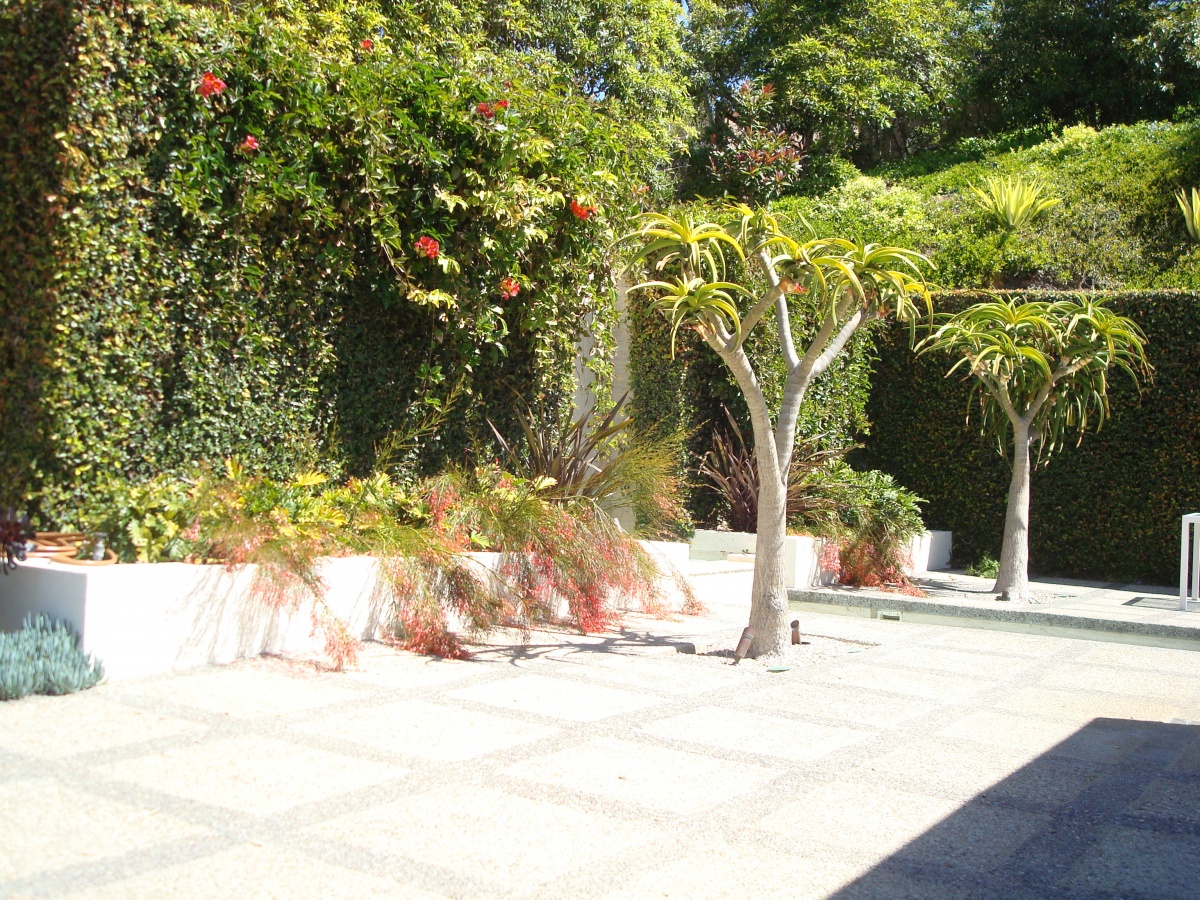
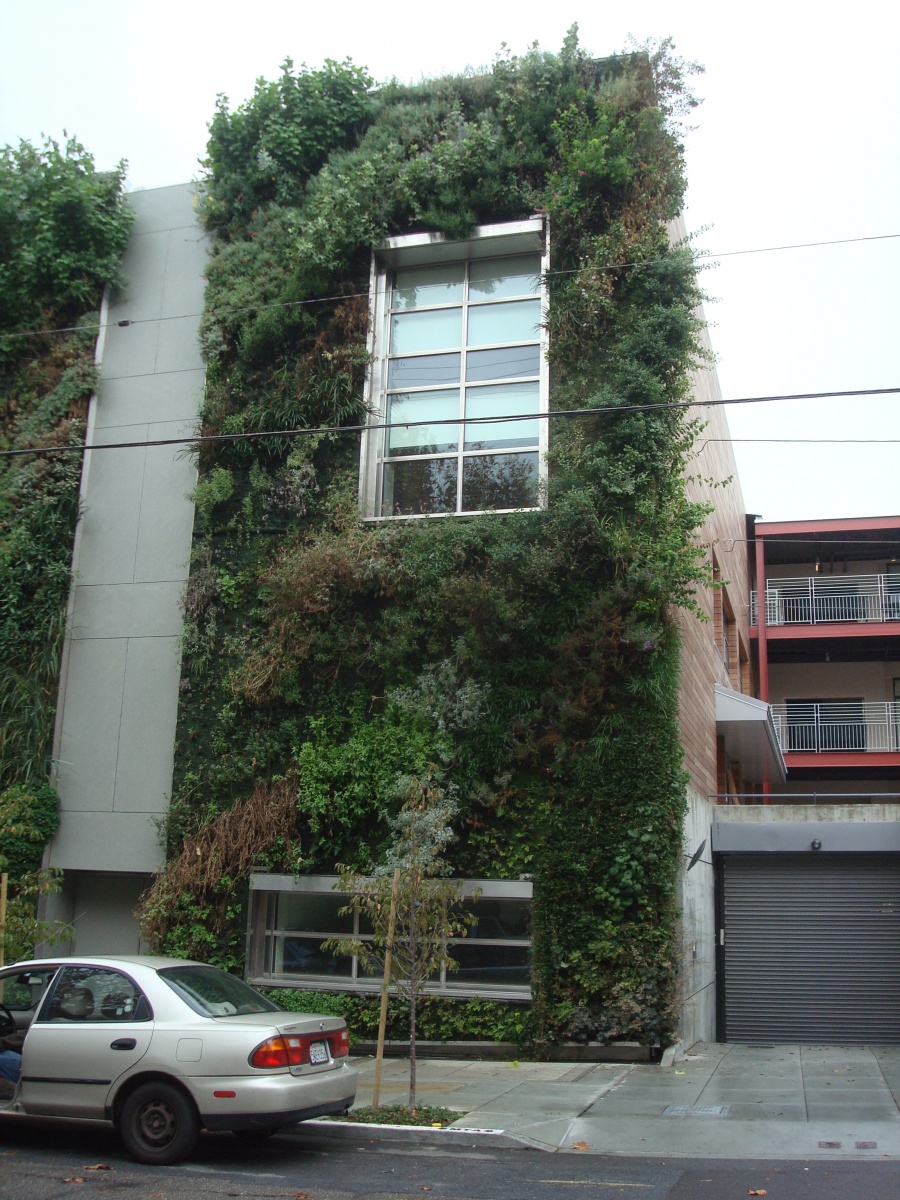
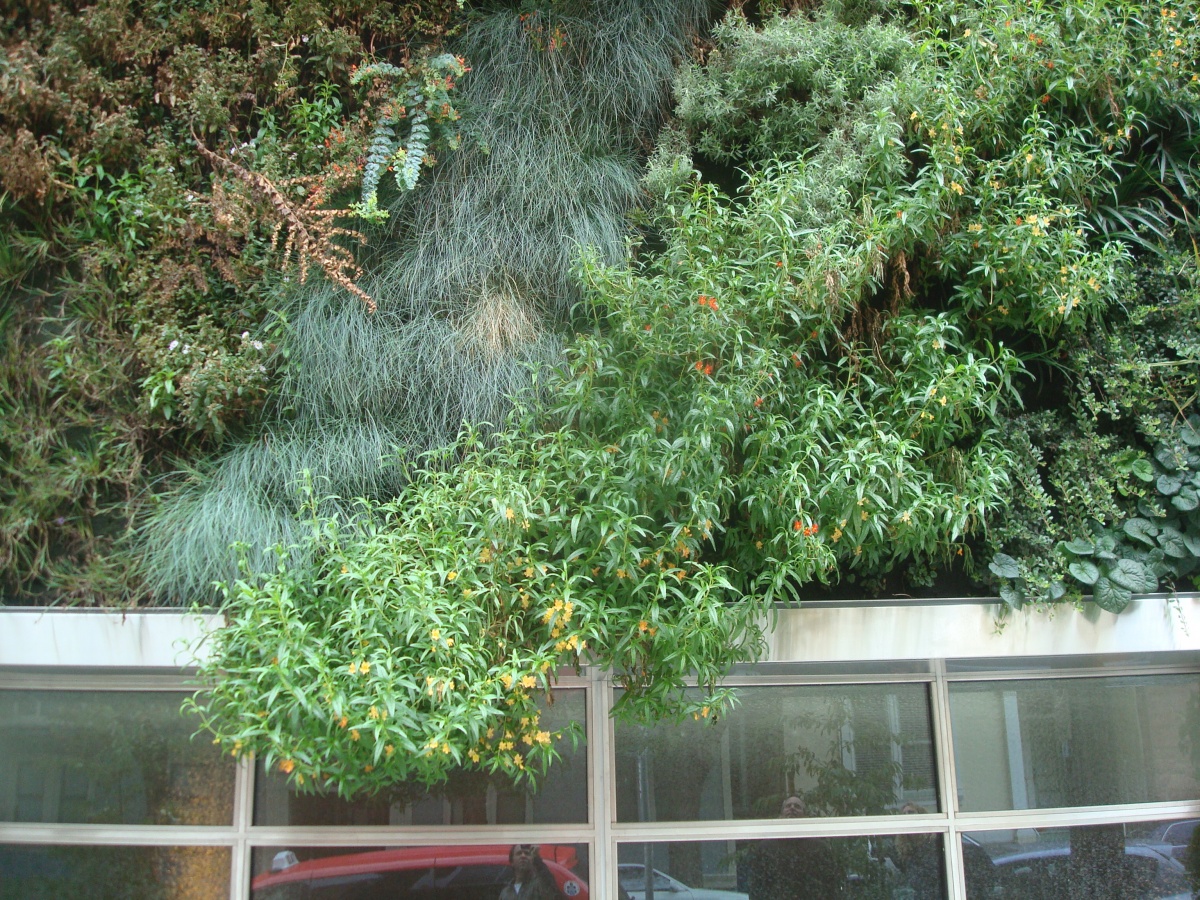
I was up in the San Francisco Bay area last week for a meeting of APLD (Association of Professional Landscape Designers) and to visit friends. UC Botanical Garden Horticulturist Meghan Ray and husband Eric Anderson kindly hosted me a day and took me to see the recent installation by green wall guru Patrick Blanc at the Drew School in San Francisco. It’s a remarkable installation and features a palette of mostly California native plants. I especially liked the diagonal sweeps of blue fescues and monkeyflowers.  There were a few plants I was surprised to see, including Fremontodendron in the upper reaches of the wall.


Outdoor living room

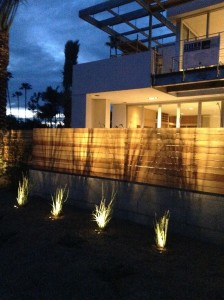
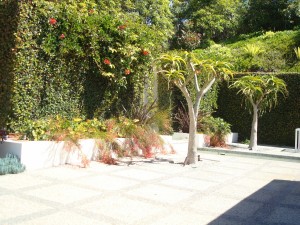
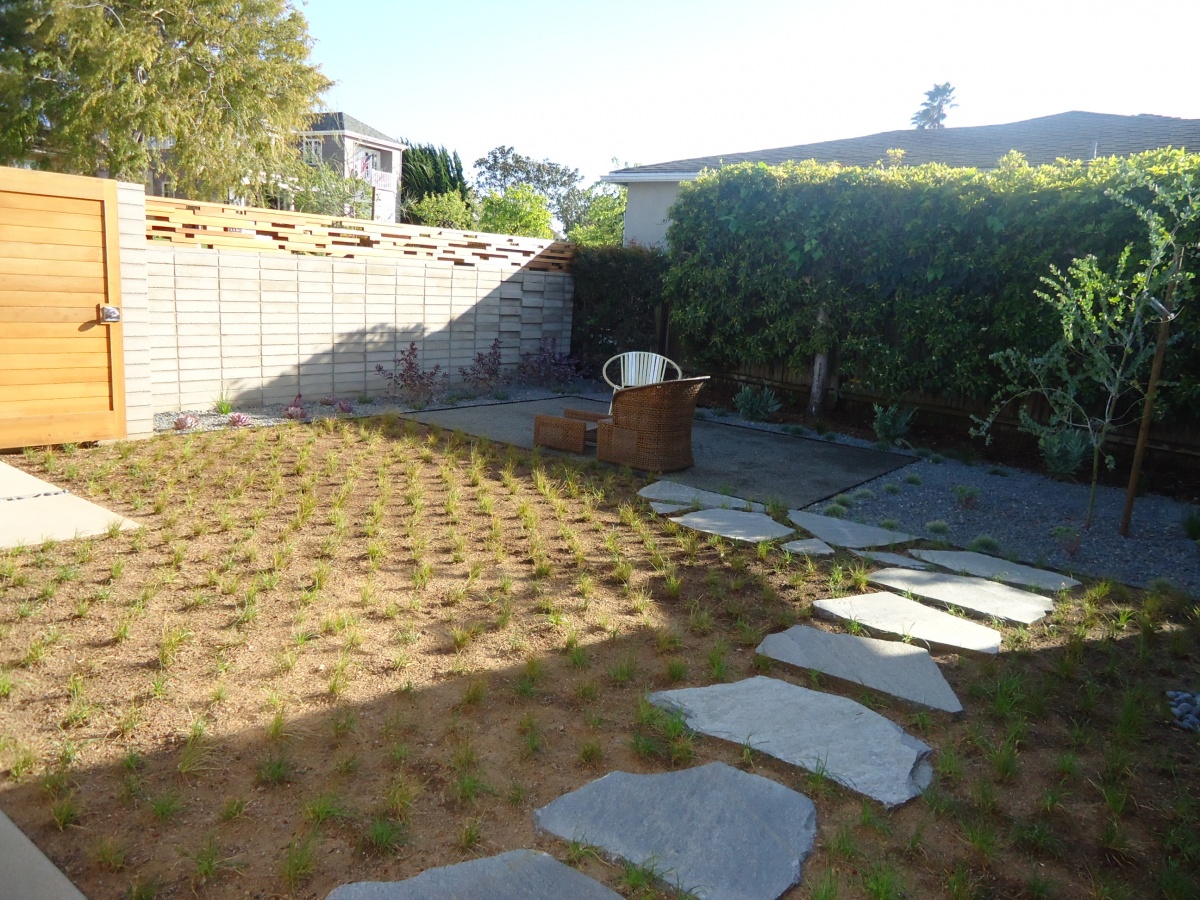
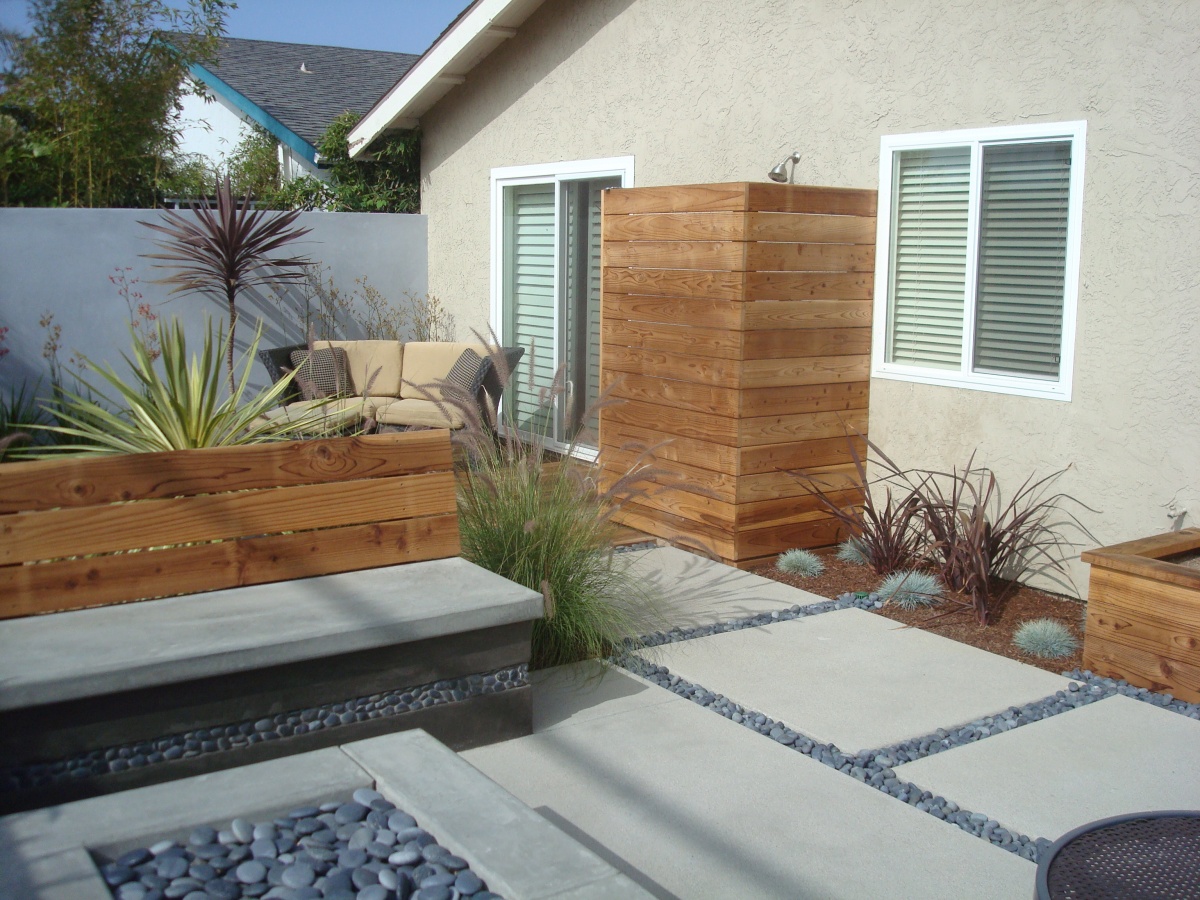
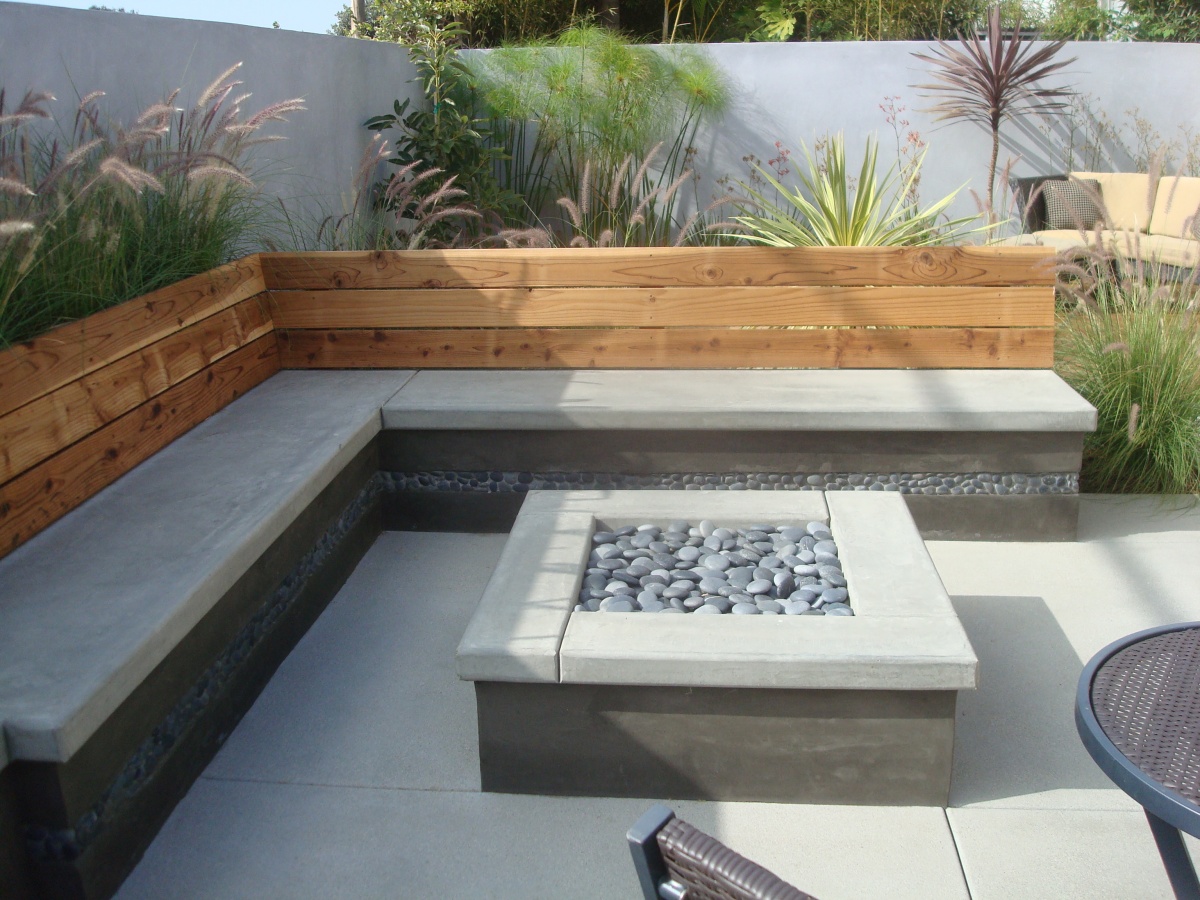
I like how this very small space packs in a lot of utility, with an outdoor shower, a couple different seating areas, a vegetable garden. The other thing that makes this space work, that makes any garden space really work, is the feeling of enclosure and privacy. The aesthetic is clean with wood and concrete, not a lot of fuss or detail, a low maintenance landscape. The grasses are attractive though they are unfortunately an invasive exotic and not something I would have specified. The outdoor shower drains passively into the garden. The breaks in the paving allow for drainage and water percolation into the soil. The house is relatively compact with a modern clean aesthetic which has now been carried into the outdoors, it all just really works for me. The design went through several iterations and required substantial effort, but the payoff is worthy. The plantings were not what I had planned but the effect is still nice.


Cedros Garden

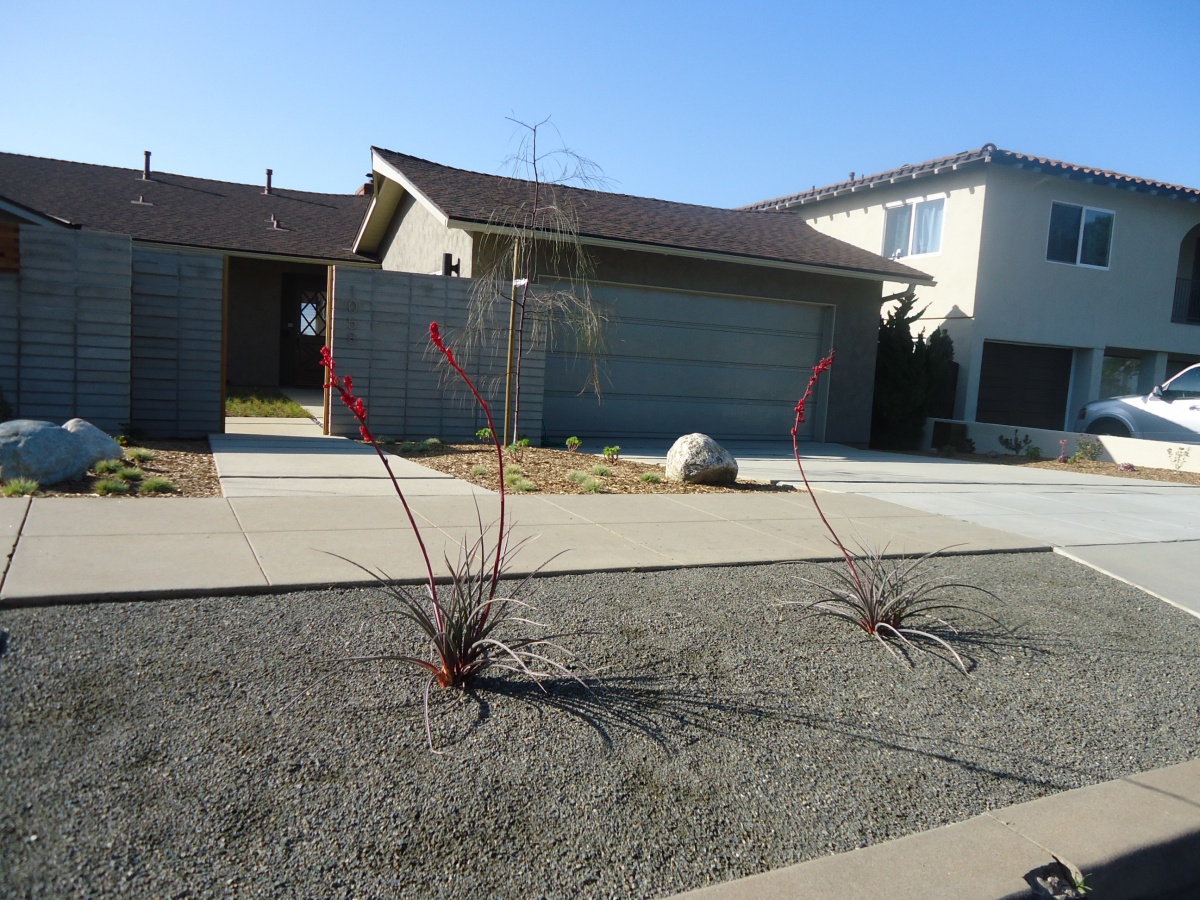
Cedros Ave. front garden

A massive pine tree was removed prior to my involvement, existing plantings dated and damaged, the driveway was badly cracked, and the property lacked curb appeal.

A massive pine tree was removed prior to my involvement, existing plantings dated and damaged, the driveway was badly cracked, and the property lacked curb appeal.

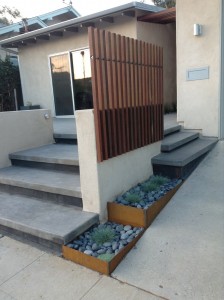
We reused the concrete from the driveway to construct two retaining walls and a stairway.New drought tolerant plantings will anchor the house to the landscape and provide year round low maintenance interest. (two months after installation)

We reused the concrete from the driveway to construct two retaining walls and a stairway.New drought tolerant plantings will anchor the house to the landscape and provide year round low maintenance interest. (two months after installation)

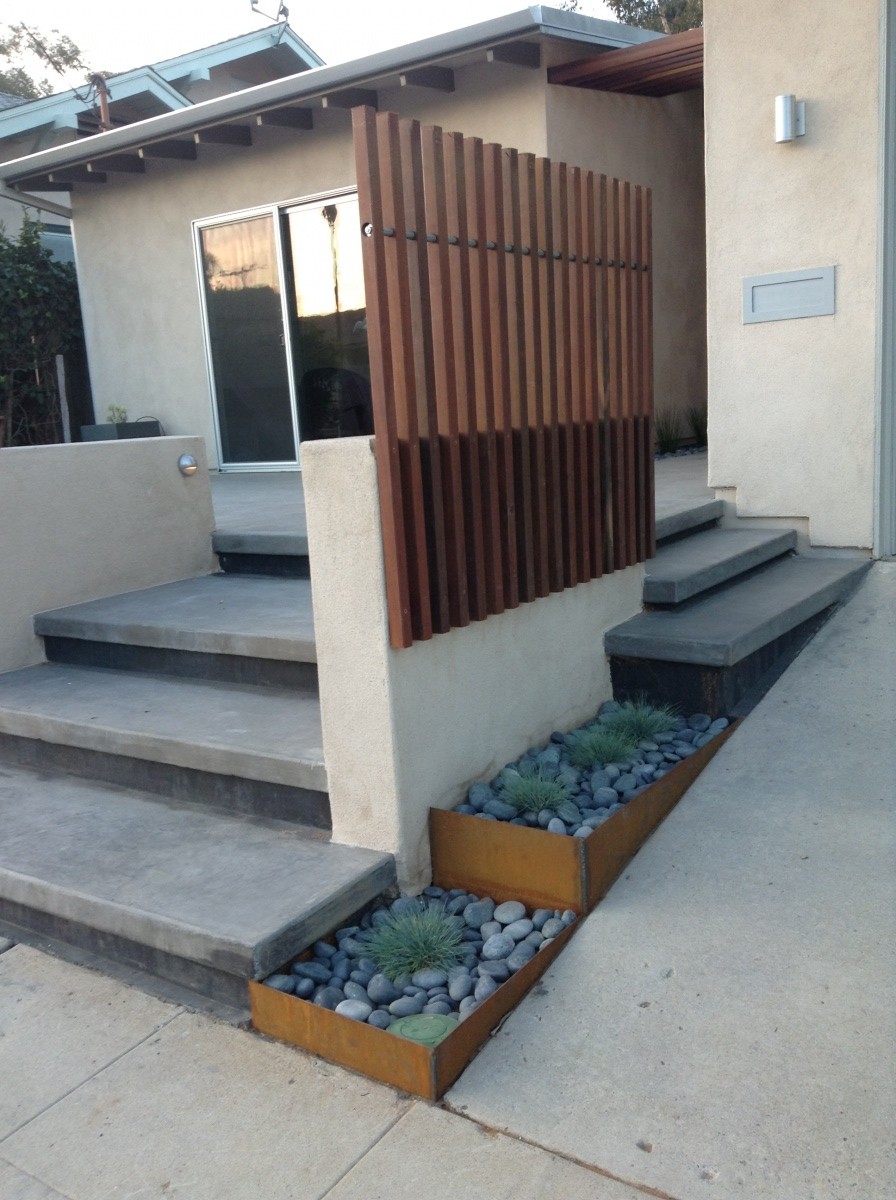
Our design added a generous stairway through the garden which welcomes visitors to the front door without forcing them to trudge up the driveway.

Our design added a generous stairway through the garden which welcomes visitors to the front door without forcing them to trudge up the driveway.

By February (7 months after installation) the grasses have filled in and the garden looks a bit fuller than it did upon installation

By February (7 months after installation) the grasses have filled in and the garden looks a bit fuller than it did upon installation

You can see just how badly the driveway was cracked in this picture.

You can see just how badly the driveway was cracked in this picture.

We installed interlocking pavers which are attractive, don't crack and allow water to infiltrate, reducing storm runoff and water pollution.

We installed interlocking pavers which are attractive, don't crack and allow water to infiltrate, reducing storm runoff and water pollution.

I stained the concrete to give it a more natural appearance. Re-using the concrete reduced cost and kept the material out of the local landfill

I stained the concrete to give it a more natural appearance. Re-using the concrete reduced cost and kept the material out of the local landfill

The plantings were designed to be both low maintenance and drought tolerant, Strong foliage texture, form and color will keep the garden interesting year round.

The plantings were designed to be both low maintenance and drought tolerant, Strong foliage texture, form and color will keep the garden interesting year round.

Five months after installation plants are starting to fill in

Five months after installation plants are starting to fill in

April 2011

April 2011

Calandrinia and Kangaroo Paws flowering nicely in late September

Calandrinia and Kangaroo Paws flowering nicely in late September


The owner selected some nice glazed urns that we planted up with an eclectic mix of plants to soften up the backyard patio

The owner selected some nice glazed urns that we planted up with an eclectic mix of plants to soften up the backyard patio

A colorful container plays well with the succulent plantings

A colorful container plays well with the succulent plantings

Personal Space

I think the link between the physical and the mental, in terms of personal space, is forgotten and its impact underestimated. We take time to organize our mental space, to rest the brain, to put things in order, to prioritize. We seek moments of rest or relaxation in the form of sleep, or entertaining, dreaming and imagining. We are aware of, and acutely uncomfortable, in times of mental disorder. Call it “stress”. Disordered and unattractive physical environments contribute to stress. Ordering our physical environments is a way of managing those feelings. In doing “chores” around the house, we simultaneously order our physical and mental spaces. I find it relaxing, especially in the garden. Working in the garden, I’m free with my creativity. I feel calmed and ordered; I feel wonder and amazement. I notice change and motion. I see more deeply. Gardens can be spaces that are beautiful and harmonious; evoking the magnificence and biological diversity of our natural areas. As a culture, I sometimes fear we underestimate the importance of beauty in our surroundings. It’s worth spending a little time and effort to make your personal space attractive and inspiring.

Beachside Planting

My clients wanted a garden on the beach, literally. Right on the beach.  As you might imagine there are some unique challenges to gardening right at the beach. The site is rather windy and the soils somewhat saline. With a little preparation and careful plant selection we were able to proceed without undue complexity.

Access to the site was challenging and all the materials had to be hand carried from the street above down several flights of stairs, including more than five cubic yards of gravel and seven cubic yards of compost.

Here is a view of the garden from the beach. It is a unique property

The flagstone pathway is also a rainwater management system, with several subterranean gravel basins that capture, filter and slow all the rainwater from the property before it reaches the lagoon.

The plantings are a mixture of mostly drought tolerant material including a few California natives. The big masses of red/orange are Anigozanthos 'Tequila Sunrise'. These plantings were installed in the fall of 2010 and are now being watered once a week.


This Lotus 'Amazon Sunset' is a great plant for cascading over the edges of containers the red orange is enhanced by the late afternoon light.

Less Lawn More Pretty (2)

More often than not a picture is enhanced by a frame. This property had a great view to the east, but the lack of foreground depth made the perimeter fence feel close, and the chain link fence interrupted the view.

By removing the lawn and introducing some compelling plant material in the foreground not only did we made the garden feel larger we made the view a good deal more interesting.

Less lawn more pretty

Calling this lawn may be an overstatement, but it is a fairly typical landscape arrangement, boring foundation plants close to the house then lawn to the property line. With sufficient water and fertilizer this lawn could be made green so the neighbors could enjoy looking at it and the homeowner could enjoy the sound of leaf blower and lawnmower once a week.

This is the same property a year after planting. Hummingbirds and butterflies frequent the garden, the space feels more intimate and private. Never needs to be fertilized and probably gets watered once every two weeks.

Better?

Designing Views

I am an ocean lover, and for me there’s something deeply compelling about looking out over the ocean. Apparently I’m not the only one because the words “ocean view” seem to catapult a property’s real estate value into the stratosphere, despite the fact that said view is but a sliver glimpsed through a tangle of power lines or buildings. A thoughtfully crafted garden view is far more compelling and immediate than some distant sliver of ocean, not to mention considerably less expensive!

Winter

Somehow a whole year has slipped by, and I while have been less than diligent with the blogging I like to think I have been more than diligent in taking care of my clients and garden design work. Finally with the coming of winter and the rains it feels like there’s time to slow down and catch up a bit, and to do a little writing and work in my own garden.

While updating the website is  still on my list of things to do I have created an online album of some of my recent work. You can see pictures at: http://picasaweb.google.com/NathanLandscapeDesign

Take advantage of these cool winter days and rains to get new plants established in your gardens. Now is also a good time to renew mulch and or get after the weeds before they go to seed. If you haven’t already you might think about some of planting some of the winter vegetables such as kale, lettuce, chard, broccoli and cilantro. The kale and chard are especially beautiful in the garden in addition to being tasty and nutritious.

Happy holidays!

Chard in my home garden with just a corner of purple kale showing

Great Grasses

I recently saw ornamental grass guru John Greenlee speak at the San Diego Horticultural Society, and it reminded me of how much I like the grasses.

We’re always drawing ideas and inspriation from nature and it’s hard to imagine a natural ecosystem that doesn’t have grasses as part of the flora. It follows that I have a hard time imagining a garden that doesn’t have at least a few grasses. I don’t think I’ve designed a garden in recent years that didn’t somehow incorporate at least a few.

Grasses are the ultimate in useful landscape plants they’re fast growing, resilient, low maintenance, pet friendly, kid friendly all while providing color, texture and motion. There’s a grass for every garden situation sun, shade, wet or dry and some (such as Carex divulsa pictured below) will grow well in all of the above. The genus Carex is in the sedge family, but I use the term grass a bit liberally to include grass-like plants from the families of sedges, restios, and rushes.

Over the past year we’ve installed some spectacular flowering plants which have performed admirably, but only one plant caused multiple clients to e-mail me on the same day, and that was the pink muhly grass (Muhlenbergia capillaris), I’ve posted a photo below sent by a Solana Beach client. When back lit and dewy it’s really a showstopper.

Even the flower floozies have come around to the grasses, especially those with bold color like the Purple Fountain grass (Pennisetum ‘Rubrum’) which regrettably I don’t have a good picture of, but you read more at: http://www.sanmarcosgrowers.com/products/plants/plantdisplay.asp?plant_id=734

Many native grasses make wonderful garden subjects. One of my favorites is the California fescue (Festuca californica) which for some reason doesn’t seem to be widely available. It’s drought tolerant, great under oaks grows in sun or shade, has great silvery color and ivory flower stalks. What’s not to like? The maroon flower in the foreground is a native Iris cultivar called Rincon.

I intend to utilize a number of grasses in my own home garden, I’ve been dividing them  and growing them on in the nursery with the expectation that I’ll get to plant them but I always seem to end up giving them away. What can I say? I guess the shoemakers children go barefoot.